What Is Espresso? A Clear Answer Without the Jargon
Espresso is coffee brewed by forcing hot water through finely ground, tightly packed coffee at high pressure, usually around 9 bars. The result is a small, concentrated shot of about one ounce with a layer of golden foam on top called crema. Espresso is a brewing method, not a type of bean or roast.
Key takeaways
- Espresso is defined by how it is brewed: fine grind, high pressure, short time.
- A single shot is about 1 ounce (30 ml); a double is about 2 ounces (60 ml).
- Any coffee bean can be used. 'Espresso roast' on a bag is a style suggestion, not a requirement.
- A shot has less caffeine than a mug of drip coffee, but far more per ounce.
Espresso is one of those words everybody uses and few people can define. It gets described as a bean, a roast, a strength level and a drink, sometimes all in the same sentence. Only one of those is right.
Espresso is a way of brewing coffee. Hot water is forced through a compact bed of finely ground coffee at high pressure, and what comes out is a small, intense shot. Change the bean and it is still espresso. Change the method and it is not.
What makes espresso espresso
Three things have to happen together.
A fine grind. Espresso grounds are much finer than drip coffee, closer to table salt or a little finer. The small particles give the water plenty of surface to extract from in a very short time.
Pressure. This is the part other brewing methods cannot copy. An espresso machine pushes water through the coffee at around 9 bars, roughly nine times normal atmospheric pressure. Drip coffee relies on gravity alone.
A short brew time. A shot takes about 25 to 30 seconds. Drip coffee takes several minutes.
Put those together and you get a drink that is thick, strong-tasting and topped with crema. If you want to see how a machine produces that pressure and heat, we walk through it in how an espresso machine works.
What is in a shot
Coffee and water, nothing else. The numbers most baristas work from look like this:
| Single shot | Double shot | |
|---|---|---|
| Ground coffee | 7 to 10 g | 16 to 20 g |
| Liquid espresso | About 1 oz (30 ml) | About 2 oz (60 ml) |
| Brew time | 25 to 30 seconds | 25 to 30 seconds |
Most cafes and home machines default to the double. When a recipe says “a shot,” check which one it means.
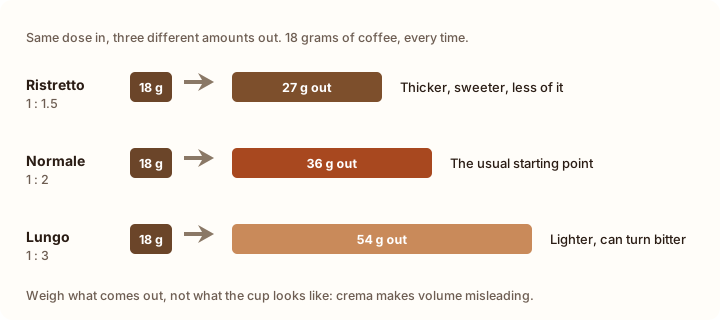
A common rule of thumb is a 1:2 ratio: for every gram of dry coffee, aim for about two grams of liquid in the cup. It is a starting point, not a law, and adjusting it is a large part of dialing in a shot.
What is crema?
Crema is the tan, foamy layer on top of a fresh shot. It forms when pressurized water dissolves carbon dioxide trapped in the coffee, and that gas comes back out of solution as tiny bubbles when the espresso reaches the cup, carrying coffee oils with it.
Fresh beans produce more of it, because coffee loses its carbon dioxide in the weeks after roasting. Crema looks appealing and adds texture, though on its own it tastes fairly bitter. Plenty of crema is a sign of fresh coffee, not proof of a good shot.
How espresso tastes
A well-made shot is concentrated without being harsh. You should notice sweetness, some acidity and a pleasant bitterness in balance, with a heavier, almost syrupy feel compared with filter coffee.
When it goes wrong, it usually goes one of two ways. A shot that runs too fast tastes sour and thin. One that runs too slowly tastes bitter and dry. Both are normally fixed by adjusting the grind, which is why grind size matters so much.
Is espresso stronger than coffee?
It depends on what you mean by strong.
In flavor and concentration, yes. Espresso has several times more dissolved coffee per ounce than drip.
In total caffeine per serving, usually not. A single shot has roughly 60 to 65 mg of caffeine, while an 8-ounce cup of drip coffee has about 95 mg. A double shot lands a little above a regular cup. We compare the two in detail in espresso vs coffee.
Espresso is also the base for other drinks
Most cafe menus are espresso plus something:
- Americano: espresso and hot water
- Latte: espresso with steamed milk and a thin layer of foam
- Cappuccino: espresso with less milk and more foam
- Macchiato: espresso with a small spoonful of milk foam
- Mocha: a latte with chocolate
So if you enjoy lattes, you are already drinking espresso. It is simply diluted with milk.
Can you make it at home?
Yes, though real espresso needs something that can generate pressure. That means a pump-driven espresso machine or a manual lever machine. A moka pot, AeroPress or French press can make strong, enjoyable coffee, but none of them reach the pressure that defines espresso.
If you are thinking about buying a machine, our guide to the best espresso machines under $1,000 covers the models most people start with.
Ready to try it yourself? Start with how to make espresso at home.
Frequently asked questions
Is espresso just strong coffee?
Not quite. Espresso is coffee, but it is made differently: hot water is pushed through fine grounds under high pressure in about 25 to 30 seconds. That produces a thicker, more concentrated drink than drip coffee, with crema on top.
What is in an espresso?
Only ground coffee and water. A typical double shot uses 16 to 20 grams of coffee and produces roughly 2 ounces of liquid. Nothing else is added unless you order a drink built on espresso, such as a latte.
How much caffeine is in a shot of espresso?
A single shot contains roughly 60 to 65 mg of caffeine, compared with about 95 mg in an 8-ounce cup of drip coffee. Espresso has more caffeine per ounce, but the serving is much smaller.
Do you need special beans for espresso?
No. Any coffee beans can be brewed as espresso. Bags labeled espresso roast are usually roasted a little darker to taste balanced under pressure, but the label is a recommendation from the roaster.